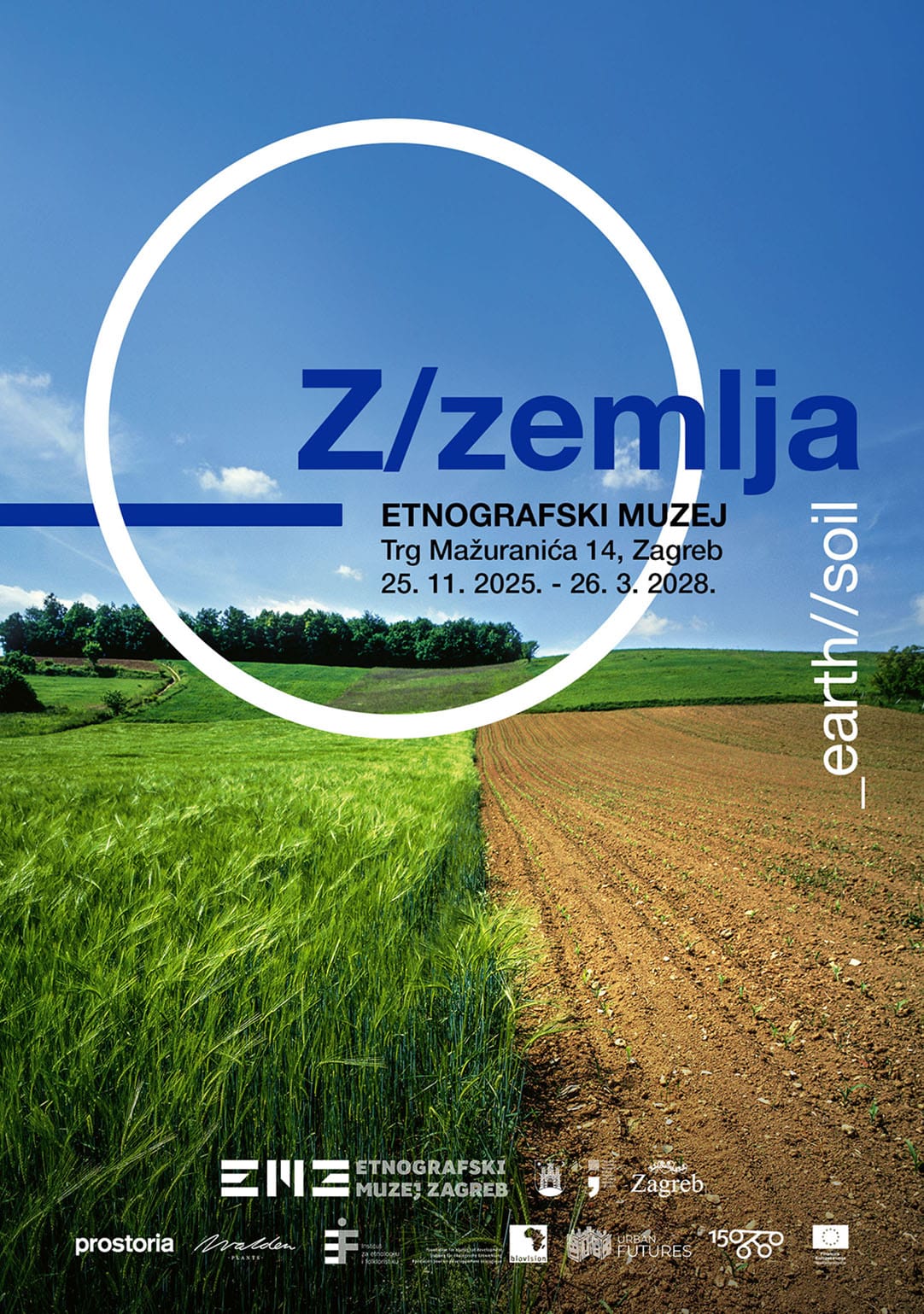
Exhibition _earth//soil
 25.11.2025. – 26.03.2028.
 18:00h
 Ethnographic Museum, Zagreb
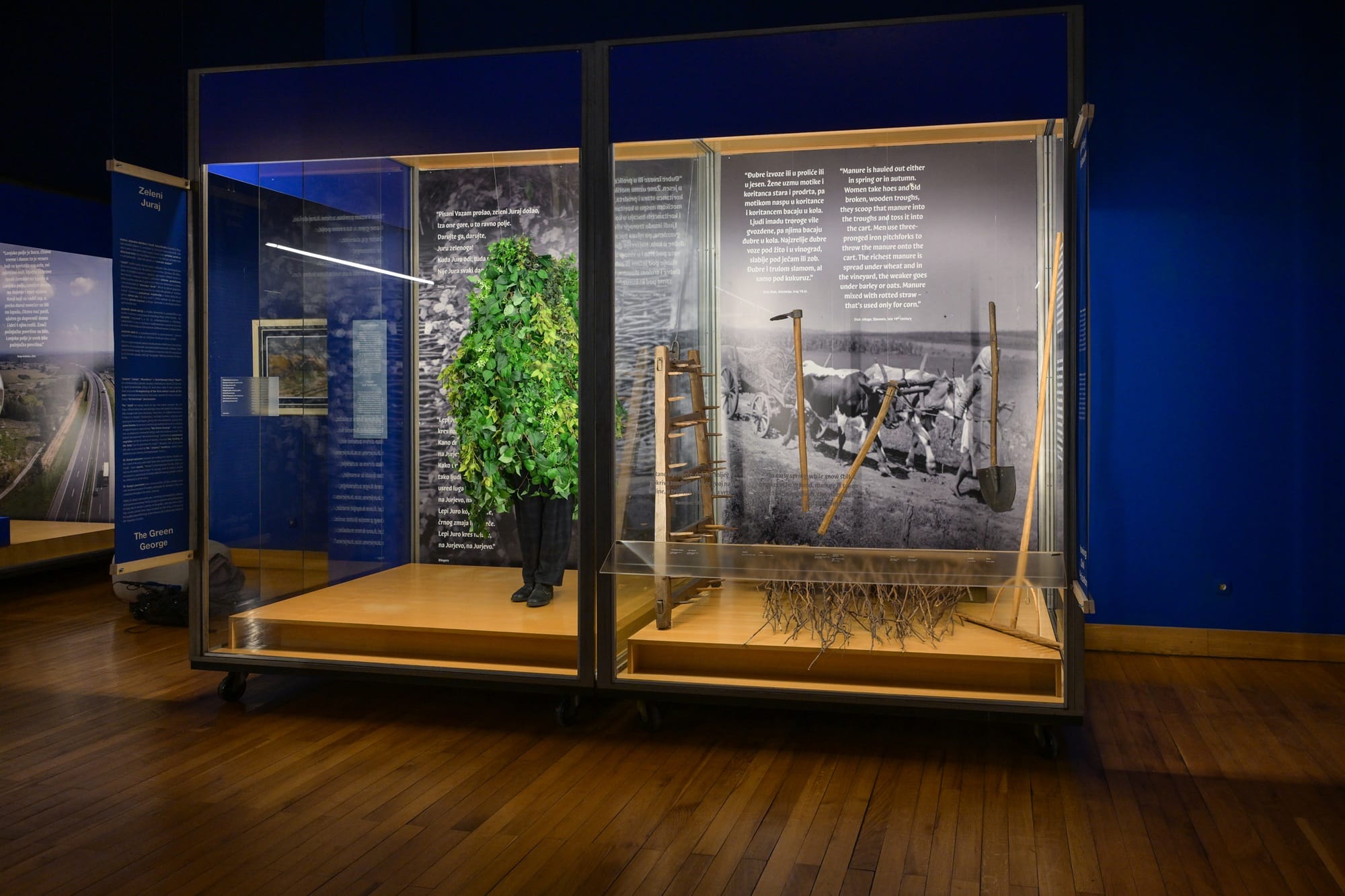
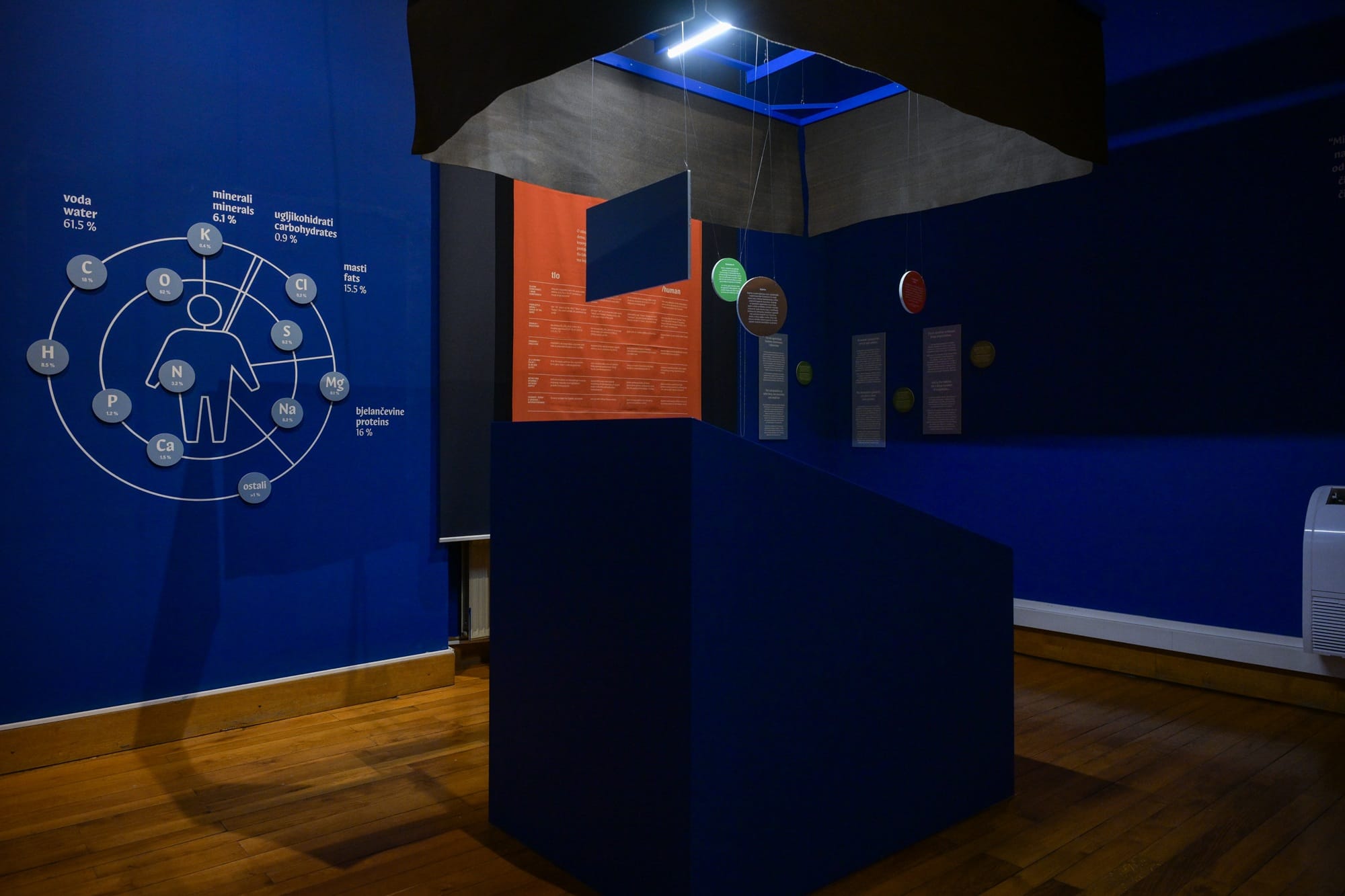
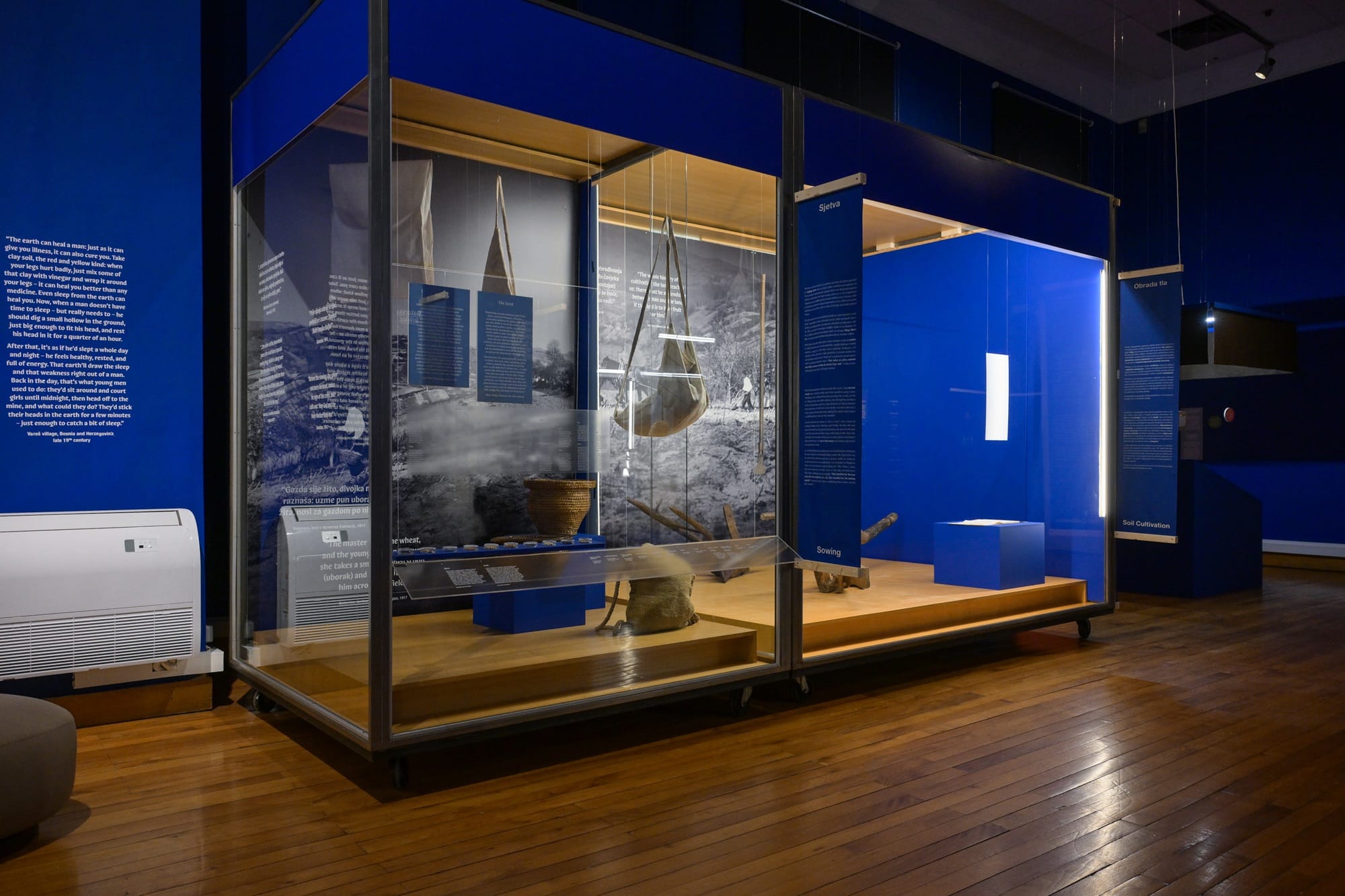
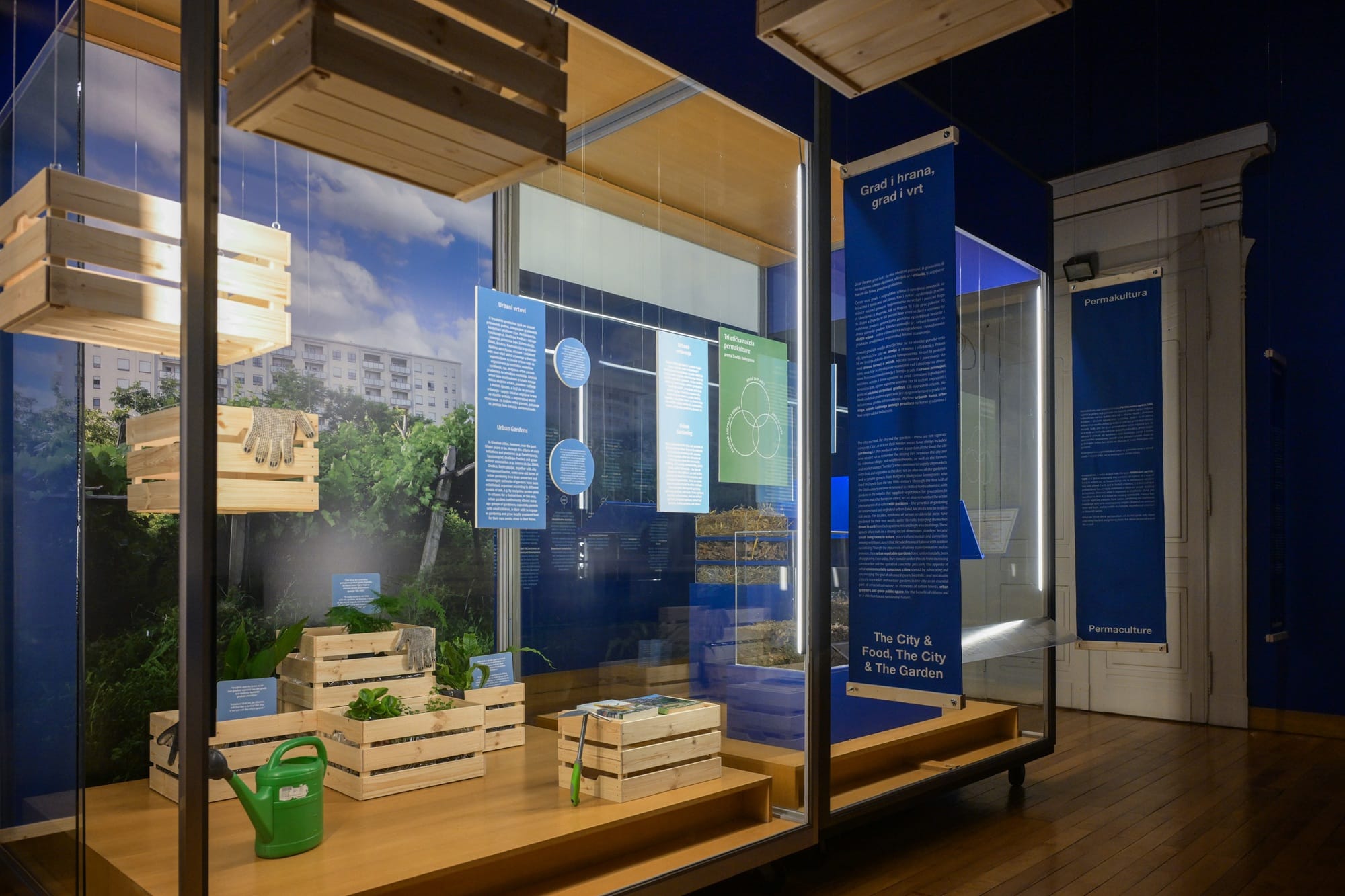
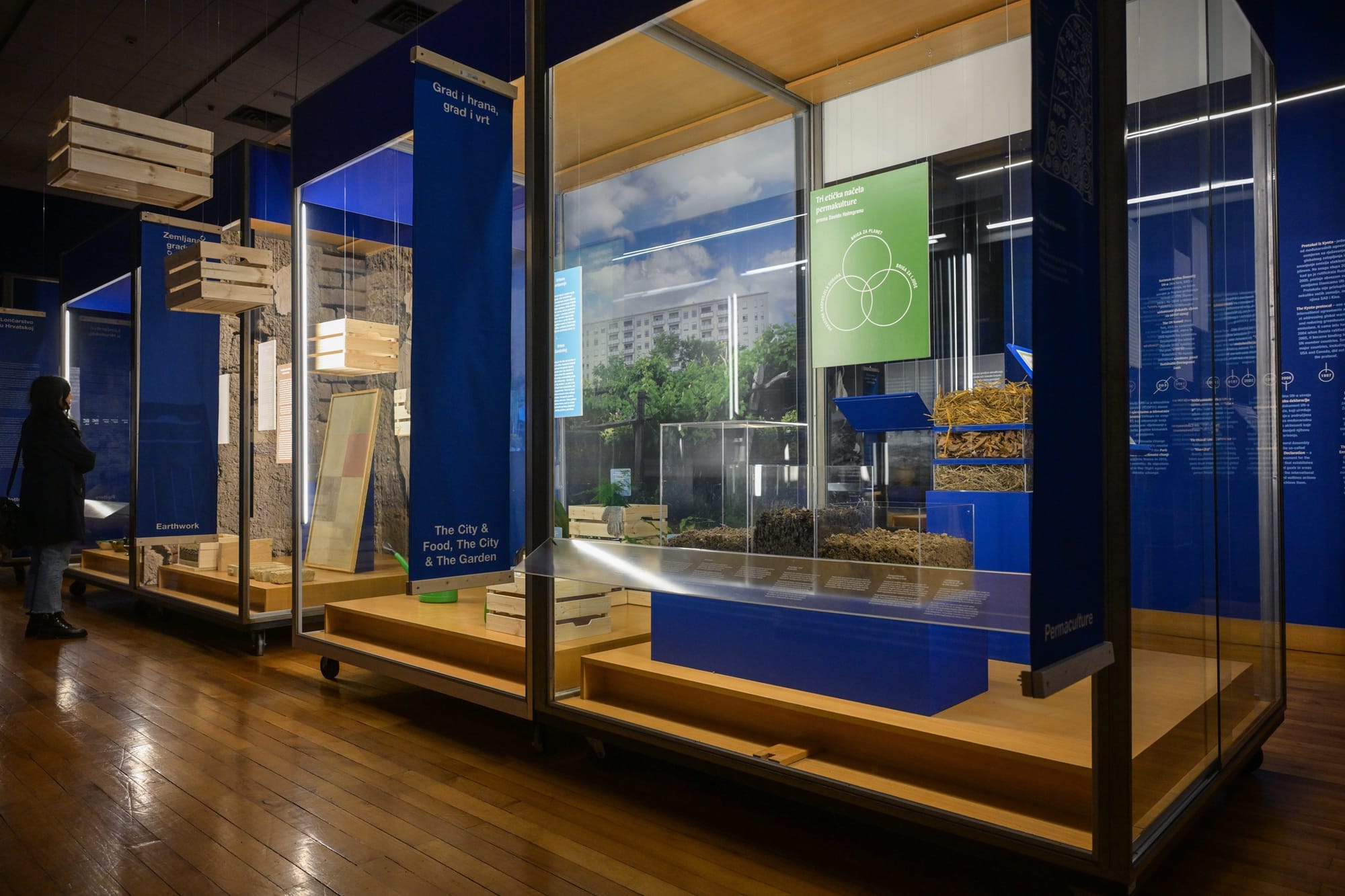
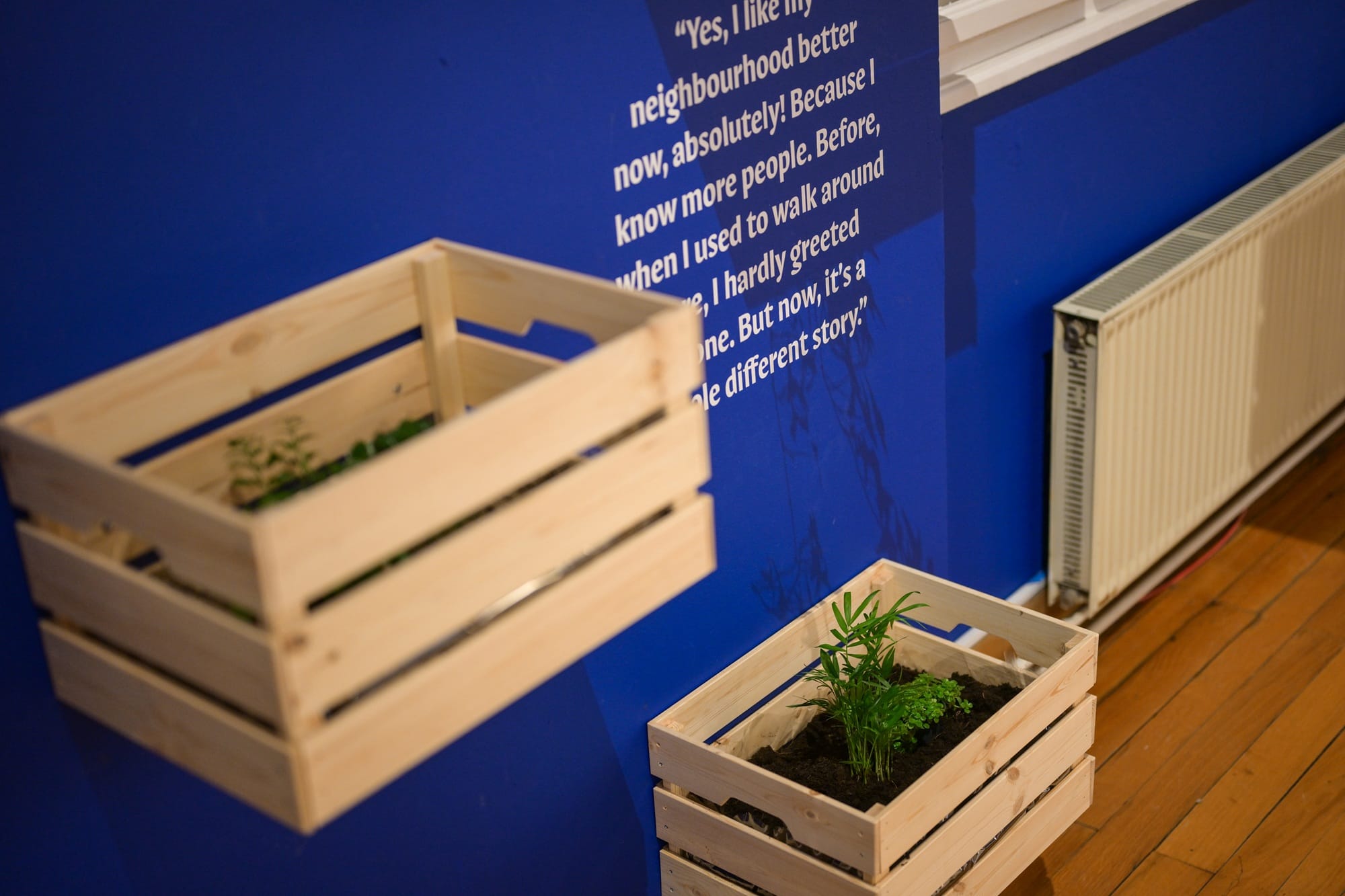
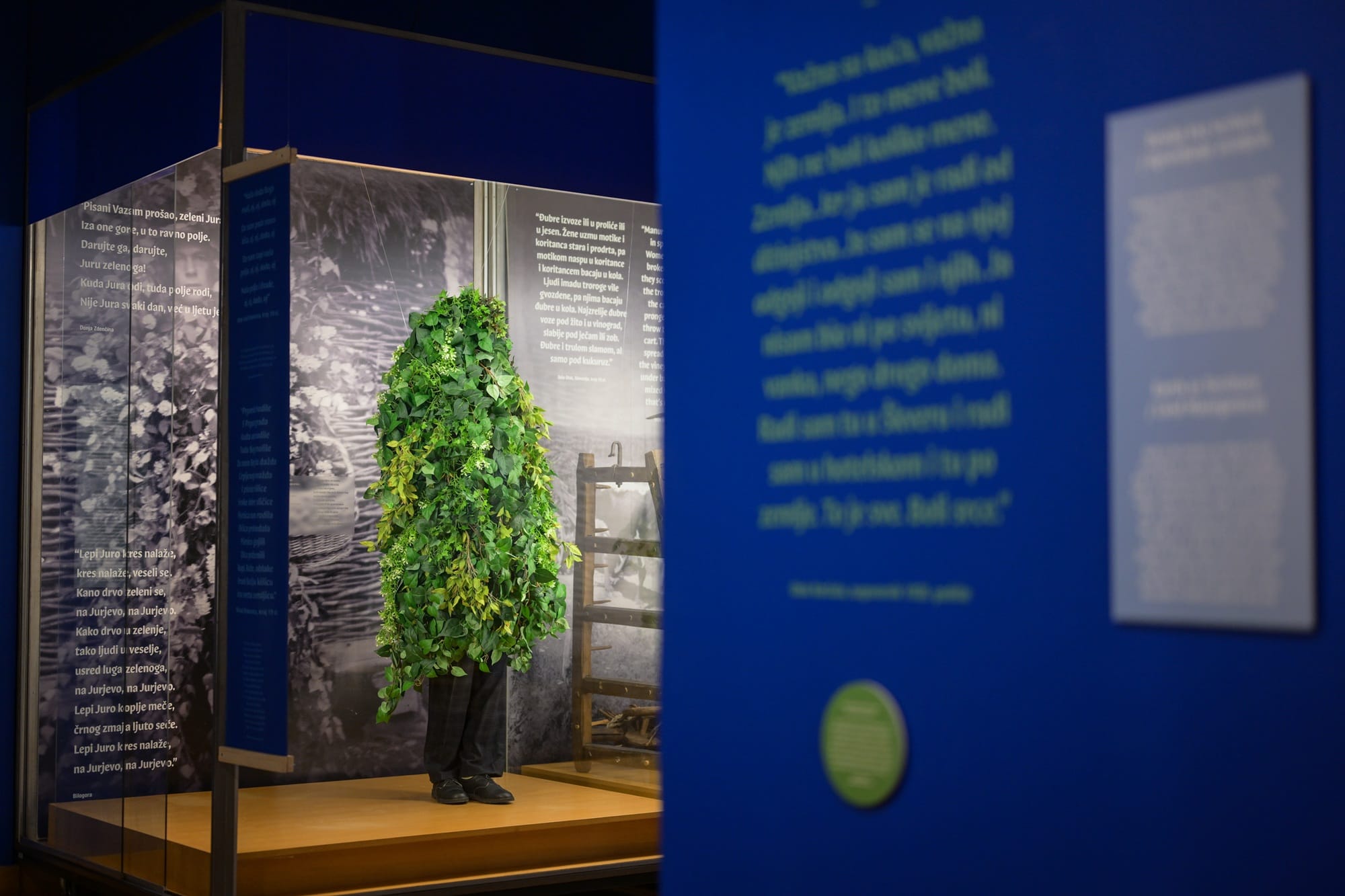
The exhibition questions the relationship of man toward soil, for which, in the exhibition title, we use the colloquial term zemlja (earth). In the opening section of the exhibition the author’s intention is to highlight the importance of the connection between people and soil on different levels and the numerous meanings that soil has in human life: as the quality of the food we eat, the water we drink, and the air we breathe, depends on the human relationship to the soil, as certain microorganisms residing in the soil become an integral part of the human digestive system through the consumption of food and water. Therefore, we establish the fundamental parameters of human dependence on and connection with the soil, which we further explore in the exhibition through several themes: agriculture, with a special focus on one of its branches—farming; customs and beliefs related to traditional soil cultivation methods; mining as the deep exploitation of mineral resources, and ceramics and earthen construction as surface exploitation of the soil, good agricultural practices related to ecology and sustainability such as urban gardens, permaculture, and biodynamics.
The exhibition is open from November 25, 2025, to March 26, 2028.
ABOUT EXHIBITION
The exhibition questions the relationship of man toward soil, for which, in the exhibition title, we use the colloquial term zemlja (earth). It highlights the connection between people and soil on different levels and the numerous meanings that soil has in human life: as the quality of the food we eat, the water we drink, and the air we breathe, depends on the human relationship to the soil. The importance of living and healthy soil is presented not only through text, but also through image and sound. Therefore, at the beginning of the exhibition, the fundamental determinants of human dependence and relationship with soil are displayed, which are further elaborated in the exhibition through several themes: agriculture, with a special focus on one of its branches – land cultivation, customs and beliefs related to the traditional way of cultivating the soil, mining as the deep exploitation of raw materials, as well as ceramics and earthen construction as the surface exploitation of soil, eco-friendly agricultural practices related to ecology and sustainability, such as urban gardens, permaculture and biodynamics.
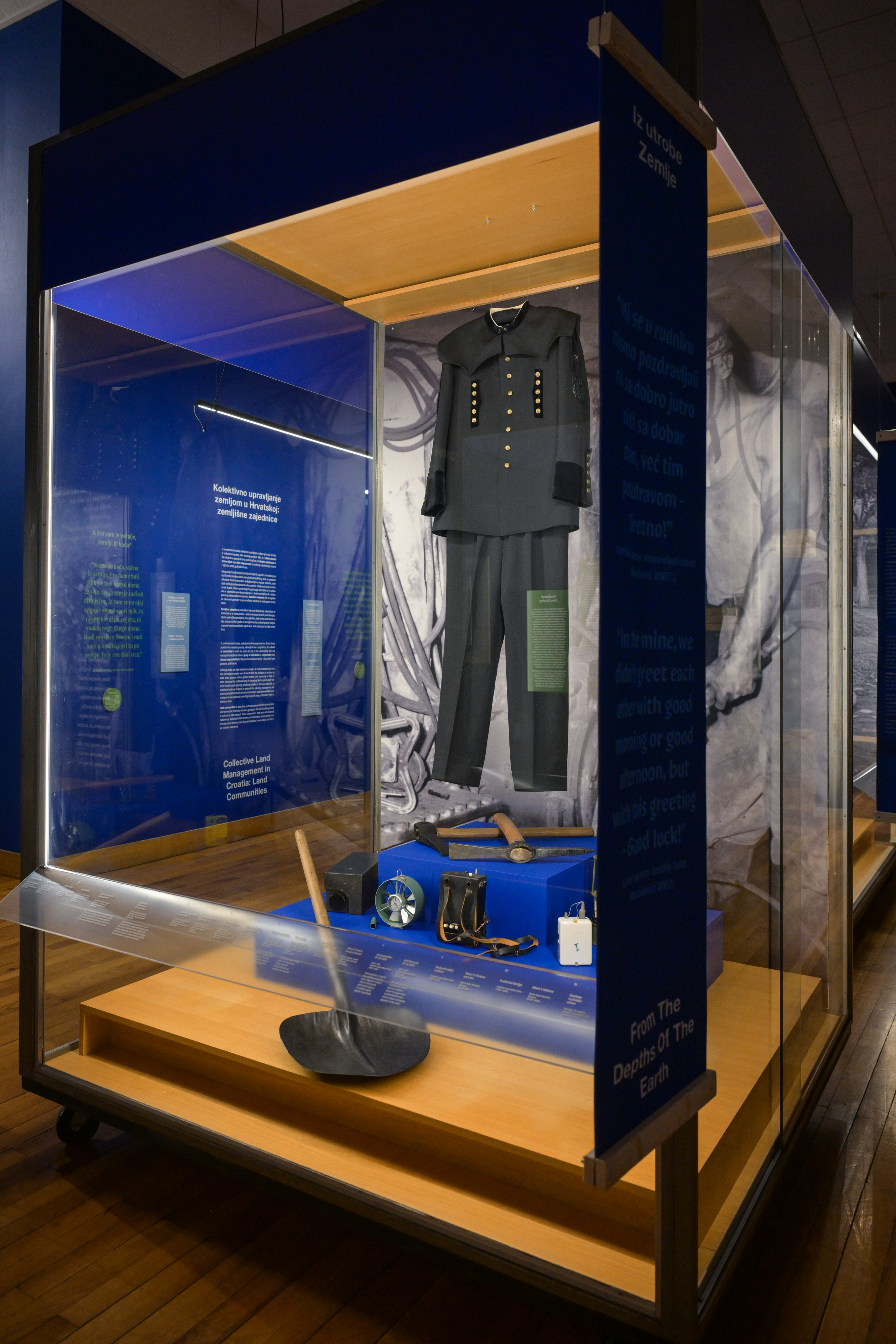
For the presentation of the mentioned themes, collaboration was established with the Faculty of Agriculture, Division of Agroecology, Department of Soil Science, from which four monoliths were borrowed, each representing one of the more common soil types in Croatia. Furthermore, collaboration was also established with the Foundation for Ecological Development – Biovision from Switzerland, which provided a recording of living soil, exclusively for the purpose of this exhibition. The Moslavina Museum from Kutina, and Petrokemija d.o.o. lent objects that contextualize work in the fertilizer factory from the time when conventional agriculture experienced its greatest expansion (from the 1960s to the 1980s), and the Petrokemija factory reached its “golden age”. For the purposes of presenting the theme of mining, the Nikola Tesla Technical Museum lent objects from its collection, while the Labin National Museum provided a series of photographs taken in 1964 by the Labin photographer Žika Tasić, documenting life in the mines.
Earthen construction is presented through objects made specifically for the purposes of the exhibition by members of the Fantast Association from Baranja. For several consecutive years, The Fantast Association has organized GlinArt (Festival of Earth and Man), which brings together all enthusiasts of earthen architecture, natural building and traditional architectural heritage.
Three types of soil installed by Dunja Zmajski from the ZMAG Association (Green Network of Activist Groups): humus, forest soil, and soil saturated with agrochemicals, will point to the differences in the ways humans treat soil and the consequences this has for life within it. For the purpose of presenting the theme of permaculture and its principles, the film Listening to the Earth, produced by Watch What You Eat Laboratory (Pazi što jedeš Laboratorij), was provided for use. The film was shot in 2025 on the island of Hvar.
The Dr. Rudolf Steiner Center in Donji Kraljevec operates as multidisciplinary institution that unites science, art and tourism, based on the teachings and knowledge of Dr. Rudolf Steiner, and under the directorship of Dr. Dijana Posavec has become an educational point in the world of biodynamics, which Dr. Rudolf Steiner developed as a response to farmers’ concerns about the deterioration of soil health and crop vitality in the early 1920s. Biodynamics, as one of the first movements to emerge within organic agriculture, is presented through biodynamic preparations, Demeter products and Steiner’s publications.
Part of the exhibition is dedicated to the ways of managing land through the distribution of collective and private ownership, the cadastre and cadastral surveys, as well as wills from the first half of the 20th century. In opposition to land management, we set up the theme titled When the Ground Shakes Beneath Your Feet, referring to our shared recent collective experience of the 2020 earthquake and the real power of nature over humankind. The exhibition is concluded with a timeline representing the history of modern ecological thought in a global sense, featuring a selection of key dates related to environmental protection.
In digital form, the exhibition presents the Schumann resonance, the land art movement, the Gaia hypothesis, as well as the definitions of the geological epoch we live in.
Autorica: mr. sc. Željka Petrović Osmak
Stručne suradnice na izložbi: dr. sc. Tihana Rubić, dr. sc. Aida Brenko, dr. sc. Suzana Marjanić, dr. sc. Olga Orlić
Idejni koncept izložbenog postava: Valentina Crnković
Vizualni identitet: Aurora Noa (Lucija Jerković)
Prostorno i grafičko oblikovanje izložbe: Studio Hrvatin (Iva Hrvatin i Matea Bertina Pejnović)
Fotografija na vizualu: Damir Fabijanić
Lektura: dr. sc. Luka Velić
Prijevod na engleski jezik: Ana Domazet
Pedagoški program: Anastazija Petrović, Silvia Vrsalović
Marketing i odnosi s javnošću: dr. sc. Ivana Lušić
Preventivna zaštita predmeta: Ivana Prodan
Tehnička realizacija postava: Davor Filipčić, Mihaela Grčević, Kristina Matković, Darijen Paša, Ivana Prodan, Mislav Šemeš, Ljiljana Vilus Japec
Fotografije: Arhiv Odsjeka za etnologiju i kulturnu antropologiju Filozofskog fakulteta Sveučilište u Zagrebu; Damir Fabijanić; Dokumentacija Etnografskog muzeja; Hrvatski muzej medicine i farmacije, Odsjek za povijest medicinskih znanosti HAZU; Narodni muzej u Labinu; Pavel Gulin Zrnić; Miroslav Kirin; Matija Kralj Štefanić, Nikola Radovani
Video zapis: Pavel Gulin Zrnić, dr. sc. Tihana Rubić
Audio zapis: Biovision and Sounding Soil
Film: “Slušanje zemlje” Pazi što jedeš Laboratorij, 2025., “Pottery-making at Kaluđerovac in Lika” Richard Carlton, 1990.
Posudba predmeta i dokumenata: Sveučilište u Zagrebu – Agronomski fakultet, Odsjek za agroekologiju, Zavod za pedologiju; Centar dr. Rudolfa Steinera; Tehnički muzej Nikola Tesla; Muzej Moslavine Kutina; Muzej Turopolja; Petrokemija d.d. tvornica gnojiva; Hrvatski muzej medicine i farmacije, Odsjek za povijest medicinskih znanosti HAZU; Državni arhiv u Dubrovniku – Arhivski sabirni centar Korčula-Lastovo, Silvija Vrsalović
Izrada predmeta: Udruga ZMAG – Vukomerić, Udruga Fantast
Vanjski suradnici i sugovornici: dr. sc. Dijana Posavec (Centar dr. Rudolfa Steinera), Sunčana Pešak, Miško Šklempe (OPG Miško Šklempe), Dunja Zbiljski (ZMAG)
Terenski zapisi: Donja Gračenica (OPG Miško Šklempe) 2024., Donji Kraljevec (Centar dr. Rudolfa Steinera), Dubranec, Pleškovec, Križevci, Zavičajni muzej Donja Kupčina, Kneževi Vinogradi (GlinArt – festival zemlje i čovjeka) 2025.
Transkripcija kazivanja: mr. sc. Željka Petrović Osmak
Administratorica društvenih mreža i suradnica na multimedijskom sadržaju: Lorena Martinić
Informatička podrška: Josip Belak
Partner izložbe: Prostoria
Sponzor izložbe: Walden Plants
Zahvale: Mario Benković, dr. sc. Iris Biškupić Bašić, Nikola Blažeković, dr. sc. Katarina Bušić, dr. sc. Jelena Ivanišević, Damir Kremenić, dr. sc. Tanja Kocković Zaborski, dr. sc. Andrea Matošević, Jana Osmak, OPG Plamea, dr. sc. Tihana Petrović Leš, dr. sc. Sanja Lončar, dr. sc. Dina Stober, Porin Šćukanec Rezniček, Dunja Tadić, mr. sc. Vinko Tarbušković, mr. sc. Aleksandra Vlatković, Vasilije Vranić i Gabriela Lozano Vranić, Marija Živković.
Istraživački rad proveden je u suradnji sa znanstvenim projektom Odsjeka za etnologiju i kulturnu antropologiju Filozofskog fakulteta Sveučilišta u Zagrebu “Poshuma-nizam i dubinska ekologija u indogenim eko-ontologijama” (voditeljica dr. sc. Marijana Belaj, suradnice: dr. sc. Suzana Marjanić, mr. sc. Željka Petrović Osmak, dr. sc. Tihana Rubić)
Istraživački rad proveden je u suradnji sa znanstvenim projektom: “Kakve gradove želimo? Suvremene transformacije urbanih vizija, praksi i etika (URBAN), NextGeneration EU” (voditeljica dr. sc. Valentina Gulin Zrnić, suradnica dr. sc. Tihana Rubić)
Istraživački rad proveden je u suradnji sa znanstvenim projektom “Infrapolitičke prakse i promjene: od devedesetih do življenih budućnosti (INFRA), NextGeneration EU” (voditeljica dr. sc. Orlanda Obad, suradnica dr. sc. Olga Orlić)
Izložba je realizirana sredstvima Gradskog ureda za kulturu i civilno društvo Grada Zagreba, Ministarstva kulture i medija Republike Hrvatske i Turističke zajednice grada Zagreba.
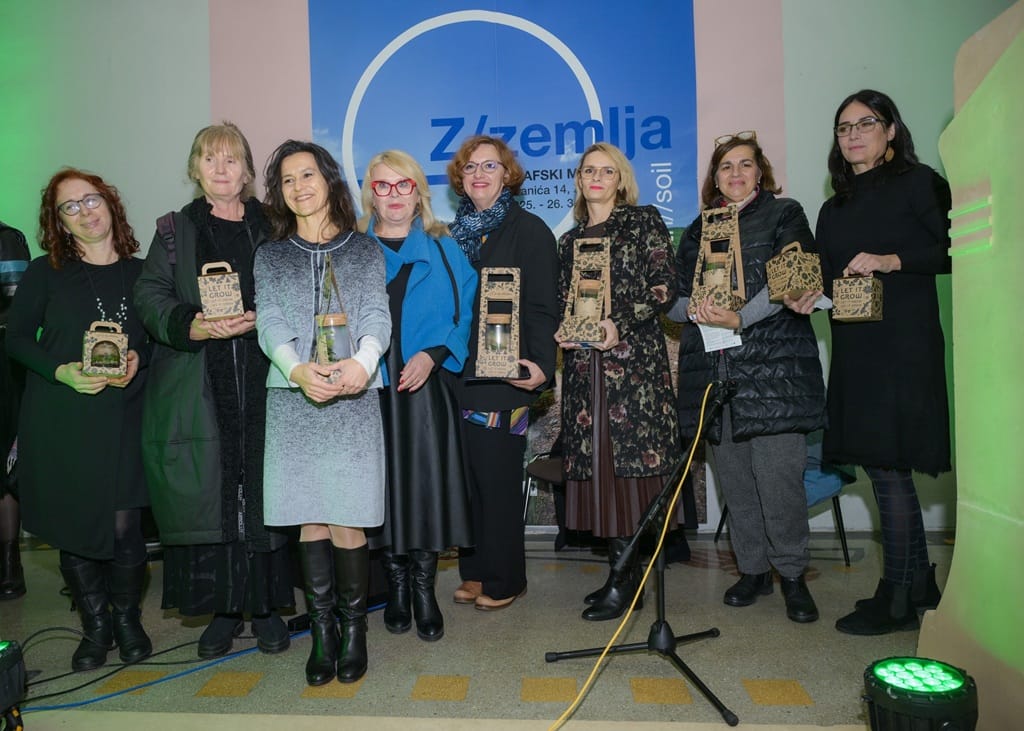
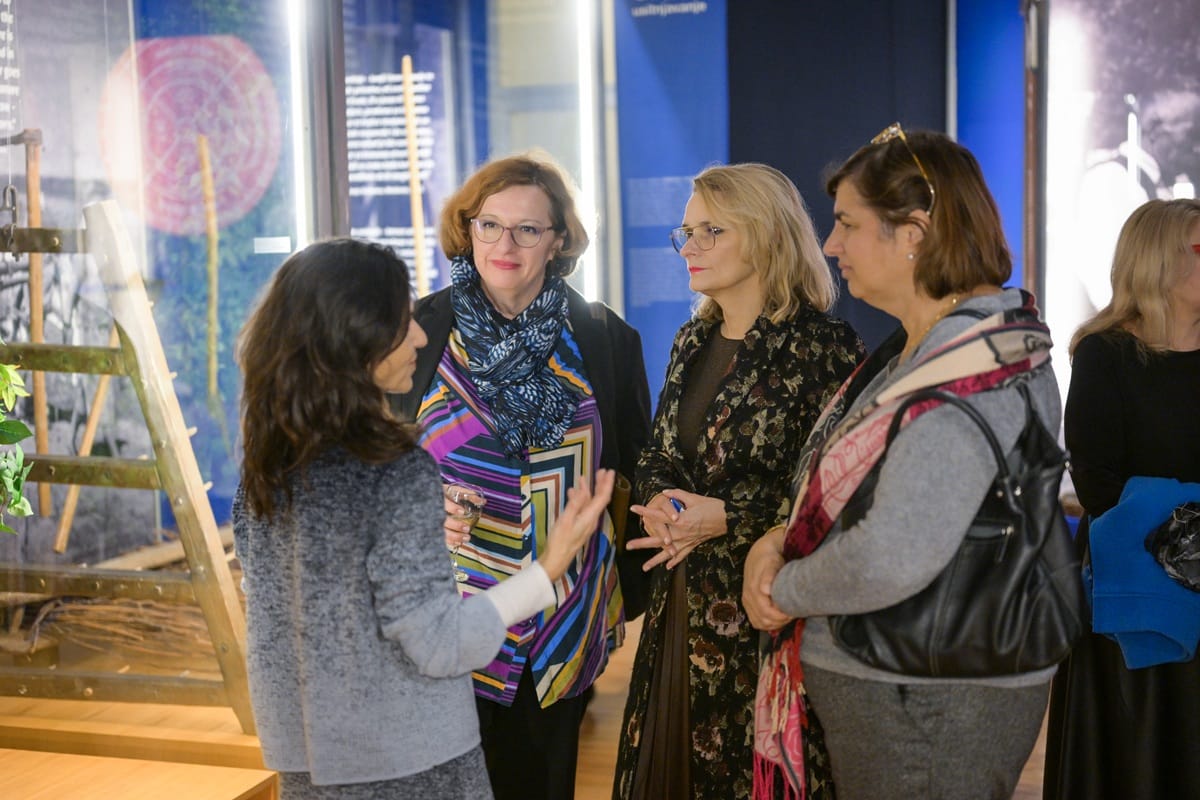
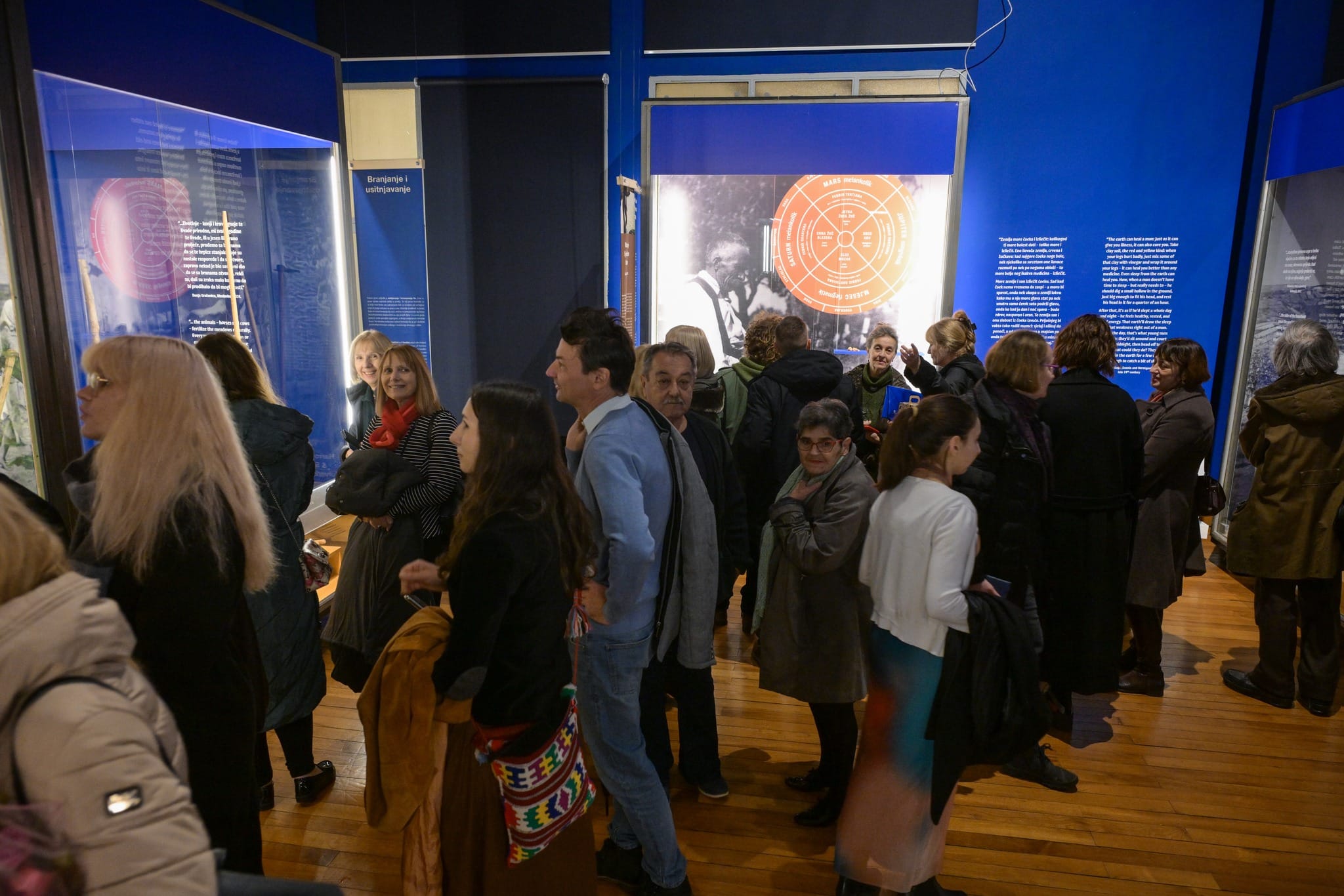
OPENING GALLERY